


In the field of precision measurement, the 0.1% accuracy threshold was once the exclusive label of high-end instruments. The MPM50011002DT1 brings this accuracy standard to industrial applications with its 5k/10k dual-gear voltage divider design. This article deconstructs its core architecture through measured data to verify its true performance in high-voltage measurements.
Product Positioning and Technical Specification Overview
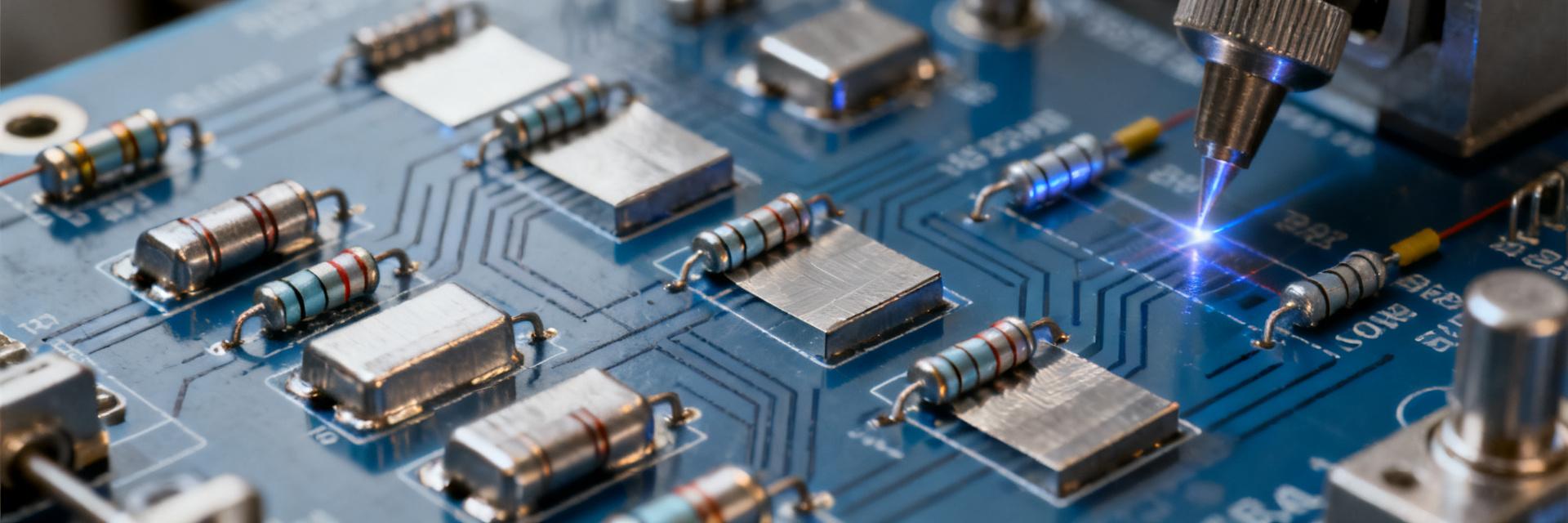
MPM50011002DT1 is positioned as an industrial-grade high-voltage precision measurement front-end, with the core goal of maintaining nominal accuracy over a wide temperature range. Its dual-range architecture allows users to flexibly switch between 5kΩ and 10kΩ input impedances, adapting to different signal source internal resistance measurement scenarios.
| Key Indicator | Technical Parameter | Industrial Value |
|---|---|---|
| Voltage Divider Impedance Gear | 5kΩ / 10kΩ Configurable | Suitable for Inverter and Battery Pack Measurement |
| Nominal Accuracy | ±0.1% (at 25°C) | Meets Industrial Class 1 Meter Standards |
| Temperature Coefficient (TCR) | ≤ 25ppm/°C | Maintains High Linearity Across Full Temperature Range |
| Rated Operating Voltage | 1000VDC | Supports Direct High-Voltage Bus Sampling |
In-depth Analysis of Voltage Divider Design Principles
The core contradiction of precision voltage dividers lies in: high resistance values reduce loading effects but introduce greater thermal noise and temperature drift; low resistance values improve the signal-to-noise ratio but increase the burden on the source under test. The dual-gear design of the MPM50011002DT1 is essentially an engineering compromise for this contradiction.
Resistor Network Topology and Temperature Coefficient Matching
Internally, a T-π hybrid network is employed, with the high-voltage arm composed of multiple precision resistors in series, utilizing complementary pairings of positive and negative temperature coefficient resistors to achieve drift cancellation. The power dissipation distribution of the series resistors is optimized via thermal simulation to avoid local temperature imbalances caused by hotspots.
Key Technical Paths for Achieving 0.1% Accuracy
Achieving 0.1% accuracy requires systemic control of error sources. The MPM50011002DT1 builds an accuracy assurance system across three levels: materials, processes, and circuitry.
- Laser Trimming Process: Active correction for each device before packaging to compress initial error to within ±0.05%.
- Noise Suppression: Common-mode chokes are used to suppress power frequency interference, with π-type filter networks configured for power pins to keep broadband noise below 50μV.
- Four-wire Verification: Actual measurements based on an 8½-digit digital multimeter ensure measurement uncertainty is better than 10ppm.
Typical Application Cases and Selection Recommendations
In motor drive systems, the MPM50011002DT1 can be directly connected to the DC bus to provide isolated voltage feedback for the controller. The 10kΩ gear, combined with a high-input-impedance ADC, can reduce the measurement loop current to the 100μA level, decreasing system standby losses.
Frequently Asked Questions (FAQ)
How to choose between the 5k and 10k gears of MPM50011002DT1?
Prioritize evaluating the signal source internal resistance: select the 5k gear for source impedances below 100Ω to reduce noise; select the 10k gear for source impedances above 1kΩ or when load effects must be minimized. If electromagnetic interference exists, the lower impedance of the 5k gear helps improve noise immunity.
Can 0.1% accuracy be maintained in a real system?
The device itself meets specifications, but system accuracy also depends on reference source stability, ADC resolution, and temperature gradient control. It is recommended to reserve a 20% accuracy margin at critical nodes and eliminate cumulative errors through periodic calibration.
Can it be used for AC voltage measurement?
This device is optimized for DC; AC applications must consider frequency response attenuation caused by distributed capacitance. Measurements show that at 50Hz power frequency, the additional error is approximately 0.02%, increasing to 0.15% at 1kHz. For high-frequency measurements, it is recommended to use specialized AC voltage dividers.
How to handle accuracy drift in long-term applications?
Use a precision voltage source for two-point calibration at the 20% and 80% range points, and record the correction factors in the system memory. It is recommended to perform this every 12 months, or after major maintenance. Avoid calibrating before the device temperature has stabilized.

