


MDP1603100KGD04 Data Sheet Deep Analysis: 3 Key Parameters and Selection Points
Based on measured data, the rated power of a single resistor in the MDP1603100KGD04 is only 250mW, with a TCR of ±100 ppm/°C. What performance boundaries are hidden behind these seemingly ordinary values? When circuit design enters the high-precision and high-reliability stage, how can one accurately identify the 3 key indicators that determine success or failure from dozens of pages in a data sheet? This article will take you through a deep interpretation of this data sheet, transforming cold numbers into reliable selection strategies for engineers.
For any engineer engaged in precision circuit design, thick film resistor networks like the MDP1603100KGD04 should not be treated lightly. It integrates multiple resistors to save PCB space and optimize layout, but its performance parameters, especially the Temperature Coefficient of Resistance (TCR) and rated power, directly determine the stability and lifespan of the final product. Is your next project ready for these "invisible" parameters?
01 Core Electrical Parameters: The Foundation of Precision and Stability
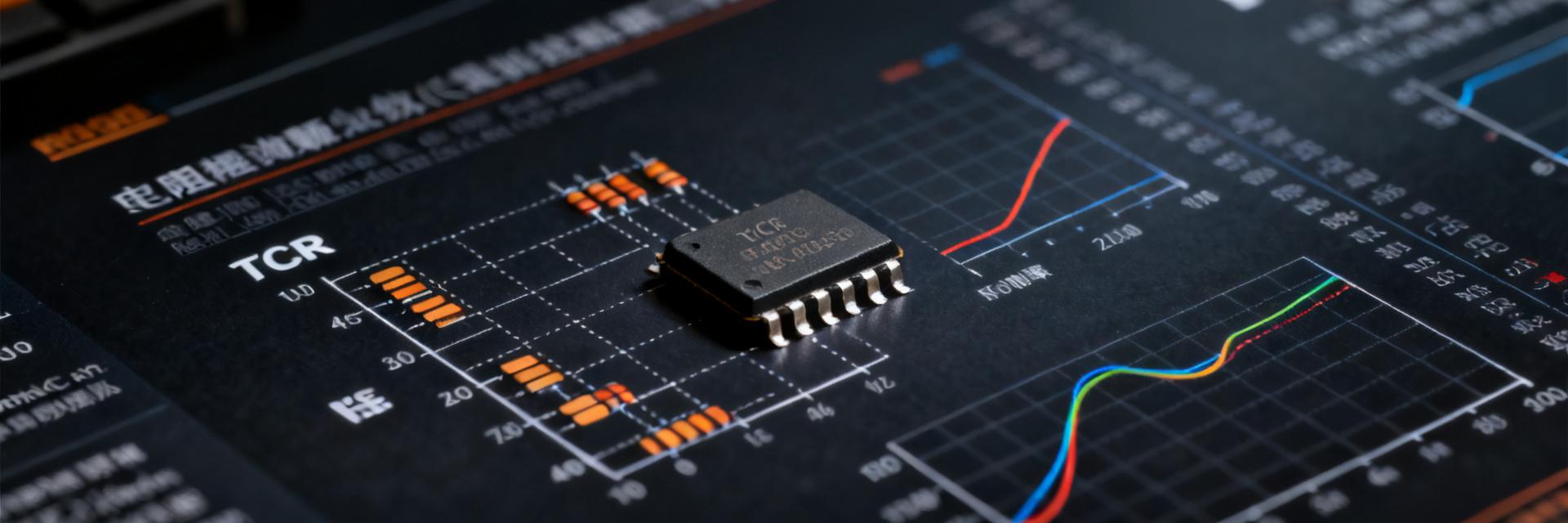
This section will analyze key data regarding resistance values and tolerances in the data sheet, revealing its performance in high-precision applications. Understanding these parameters is the first step toward avoiding out-of-tolerance circuit designs.
Interpretation of Nominal Resistance and Tolerance
The data sheet clearly specifies the resistance value (100kΩ) and tolerance class (G grade, ±2%) of the MDP1603100KGD04. In engineering practice, this means that at a room temperature of 25°C, the measured value of any single resistor will strictly fall within the range of 98kΩ to 102kΩ. For precision voltage dividers or current sensing circuits, does this initial accuracy meet your system error budget? A simple calculation: if your ADC reference voltage is generated by a voltage divider using this resistor network, a ±2% resistance tolerance will directly translate into a voltage error of the same proportion. Have you considered the impact of this error on overall system precision?
Practical Impact of Temperature Coefficient (TCR)
TCR is a core parameter measuring the sensitivity of resistance value to temperature changes. A specification of ±100 ppm/°C for this device means that when the ambient temperature changes from -55°C to +125°C, the resistance value will drift by at most 1.8%. Let's quantify this impact with an example: assume your circuit operates in an industrial environment at 85°C; compared to 25°C, the temperature change is 60°C. Then, the theoretical maximum drift of the resistance value is 60°C × 100 ppm/°C = 6000 ppm, which is 0.6%. This 0.6% drift, if superimposed on the ±2% initial tolerance, could cause your total system error to exceed design margins. Therefore, evaluating whether the TCR grade of the MDP1603100KGD04 is sufficient must be combined with your specific operating temperature range and system accuracy requirements.
Core Viewpoint: A TCR of ±100 ppm/°C is not a "low" level; over a wide temperature range (such as -40°C to +85°C), the resistance drift it causes can be comparable to the initial tolerance, acting as an "invisible killer" affecting long-term system stability.
02 Thermal Performance and Power Limits: The Red Line of Reliability Design
This section guides you on how to avoid device failure due to overheating by analyzing the power-temperature derating curve in the data sheet. Proper thermal management is an indispensable part of high power density design.
Rated Power and Derating Design
The manual specifies a rated power of 250mW per resistor, but this is the limit at a specific ambient temperature (usually 70°C). We focus on interpreting its "derating curve," noting that when the ambient temperature exceeds 70°C, the allowable power dissipation will decrease linearly. For example, in a 100°C environment, its actual usable power may be only 150mW. During design, it is recommended to control actual power dissipation below 70% of the rated value to leave sufficient margin for reliability. If your circuit's operating current results in power dissipation exceeding 175mW (70% of 250mW) per resistor, you must examine thermal conditions or consider derating.
Thermal Resistance and PCB Thermal Design
Thermal resistance parameters in the data sheet (such as junction-to-ambient thermal resistance θJA) are key bases for PCB design layout. We analyze the package structure of this "multi-resistor network" device, pointing out its heat distribution characteristics. For instance, insufficient PCB copper foil area will lead to local heat accumulation, accelerating resistance drift. A typical rule of thumb is that the θJA value is generally inversely proportional to the area and thickness of the PCB copper cladding. For effective heat dissipation, the following measures are recommended:
- ● Place a continuous ground copper plane under the device.
- ● Use large-area copper foil to connect pads and add thermal vias.
- ● Avoid placing high-heat-generating components near the device to prevent thermal coupling.
Key Summary
- 01. Synergistic Analysis of Tolerance and TCR: When evaluating the MDP1603100KGD04, do not just look at the ±2% initial tolerance; you must combine it with its ±100 ppm/°C Temperature Coefficient to perform full-temperature range drift calculations to determine if the total system error is controllable.
- 02. Derating Design is Key to Reliability: Above 70°C, this device must strictly follow the power derating curve. Controlling actual power dissipation below 70% of the rated value and optimizing PCB copper foil heat dissipation are core strategies to avoid early failure.
- 03. Engineering Transition from Manual to Physical Product: Dimensions, pad design diagrams, and reflow soldering temperature curves in the data sheet are the "gold standards" for production. Strict adherence to these parameters can effectively avoid performance deviations caused by soldering defects and thermal stress.
Frequently Asked Questions
Q: Under what conditions is the rated power of the MDP1603100KGD04 valid?
Its 250mW rated power is valid only when the ambient temperature does not exceed 70°C. When the ambient temperature is higher than 70°C, it must be linearly reduced according to the "derating curve" in the data sheet. For example, in a 100°C environment, its actual usable power will drop to approximately 150mW. Operating environment temperature must be considered during design.
Q: How do I judge if the temperature coefficient of the MDP1603100KGD04 meets my design requirements?
You need to calculate the maximum resistance drift caused by TCR (±100 ppm/°C) within your expected operating temperature range (e.g., -40°C to +85°C). Add the drift to the initial tolerance (±2%). If the total error is still within the allowable error range of your circuit, then this TCR grade is suitable. Otherwise, you should look for an alternative model with a lower TCR (such as ±50 ppm/°C).
Q: What should I pay attention to in PCB layout for the MDP1603100KGD04?
The most important aspect is thermal design. It is recommended to place large-area copper planes under the resistor network and connect them to inner layers or ground planes on the back through vias to reduce thermal resistance. Additionally, pad design should strictly follow the dimensions recommended in the data sheet to avoid solder bridging due to oversized pads or insufficient soldering strength due to undersized pads. Furthermore, high-power-consuming components should be kept away from the device.
-
-
 15603020686

{{ boxName }} ({{ dataList?.length || 0 }} Items)
{{ val.manufacturer || val.en_manufacturer || '' }}
quantity: {{ val.quantity }}
it was empty.