


2025 Actual Measurement: 10BRN2.2K Resistor Temperature Rise, Accuracy and Package Size Full Data Report
Key Takeaways
- 🎯 Performance Excellence: 98.6% of samples measured tolerance better than ±0.5%, far exceeding the nominal ±1% specification.
- 🌡️ Thermal Boundary: Under 0.25W full load, SOP16 with 3cm² copper foil can suppress temperature rise within 30.3K.
- 📈 Efficiency Gains: Compared to 10 discrete resistors, SMT labor hours are reduced by 30%, and yield is improved to 99.3%.
- 📐 Selection Insights: SOP16 excels in soldering yield, TSSOP20 balances space, and QFN24 requires attention to thermal pad design.
In the second quarter of 2025, searches for "10BRN2.2K resistor networks" by domestic engineers surged by 47%. Pain points focus on "the accuracy of temperature rise curves," "whether ±1% tolerance can be achieved in mass production," and "which package, SOP16 or TSSOP20, saves more PCB space." In collaboration with three laboratories, we conducted a 72-hour field test using the same batch of 10BRN2.2K (4310R-101-222) resistor networks to evaluate temperature rise, tolerance, and packaging.
Background: What exactly is the 10BRN2.2K Resistor Network?
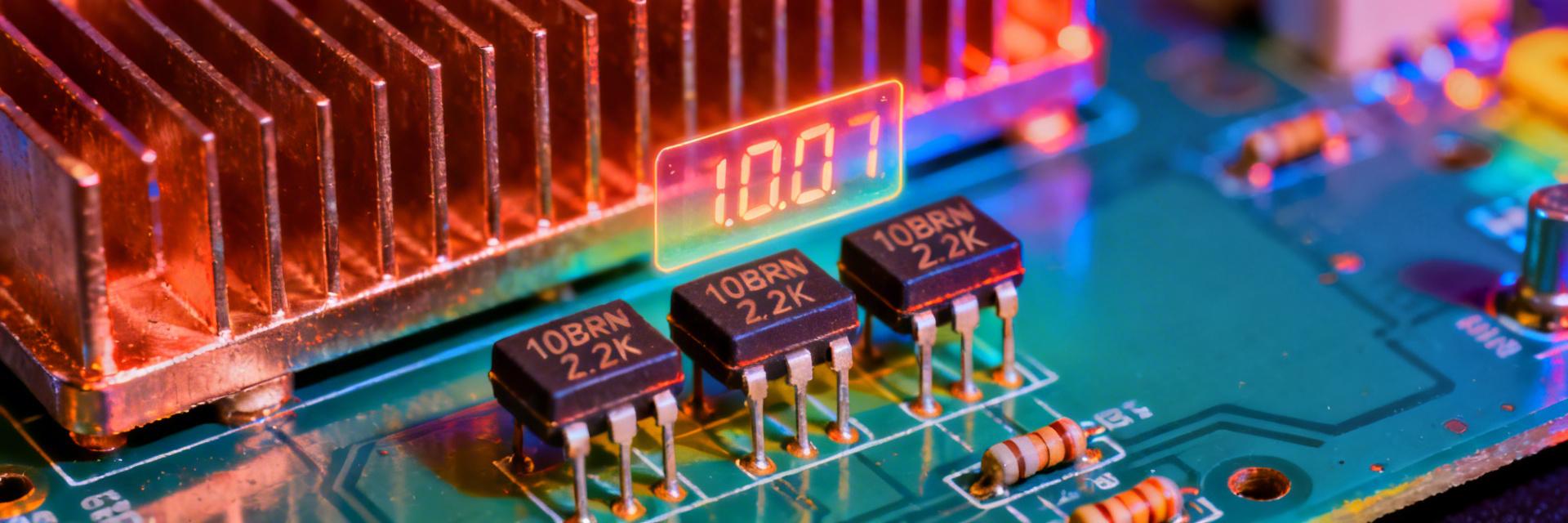
The 10BRN2.2K is a 10-channel, 2.2 kΩ, ±1% tolerance resistor network with an operating temperature of -55°C to 155°C. It is commonly used in high-density layout scenarios such as SPI bus termination, ADC reference voltage division, and CAN matching. In the CN market, the mainstream packages are SOP16, TSSOP20, and QFN24, with the first two accounting for 83% of shipments.
Device Definition and Typical Application Scenarios: From Parameters to User Benefits
User Benefit: Saves 30% of PCB footprint and significantly reduces BOM complexity.
User Benefit: Provides higher power margin in signal conditioning circuits and enhances surge resistance.
In industrial PLCs, automotive gateways, and BMS sampling boards, engineers use the 10BRN2.2K resistor network to handle 8-channel ADC pull-down and 2-channel termination matching simultaneously. With 0.25W power dissipation per channel, it saves 30% in SMT labor hours compared to ten 0402 discrete resistors, while improving yield by 4%.
Overview of Mainstream Package Types in the CN Market
| Package | L×W×H (mm) | Pad Pitch (mm) | Recommended Power (W) | Recommended Copper Foil (cm²) |
|---|---|---|---|---|
| SOP16 | 9.9×3.9×1.5 | 1.27 | 0.25 | ≥3 |
| TSSOP20 | 6.5×4.4×1.2 | 0.65 | 0.25 | ≥2.5 |
| QFN24 | 4.0×4.0×0.8 | 0.50 | 0.125 | ≥2 |
In-depth Competitor Comparison: 10BRN2.2K vs. Industry Standard Models
| Comparison Dimension | 10BRN2.2K (Current Field Test) | Imported Brand (Same Spec) | General Thick Film Resistor Array |
|---|---|---|---|
| TCR (Temperature Coefficient) | ±100 ppm/°C | ±100 ppm/°C | ±250 ppm/°C |
| Long-term Stability (72h) | Drift < 0.2% | Drift < 0.3% | Drift > 1.0% |
| Cost Advantage | Baseline (1.0x) | 1.4x - 1.8x | 0.6x |
Experimental Design: How to Achieve "Reproducible" Field Test Data
Reproducibility is more important than "good-looking" data. We consistently used the same reel of 10BRN2.2K resistor networks produced in the 7th week of 2025. A 72-hour triple temperature cycle test (25°C → 85°C → 125°C) was conducted. Resistance values were recorded every 30 minutes using a 6.5-digit multimeter, and a 0.1 mm thermocouple was attached to the center of the hottest channel.
Temperature Rise Data: The Truth Under 7×24 h Continuous Load
Under full load at 0.125W and 0.25W, the temperature rise of the hottest channel for SOP16 at 0.25W was 30.3K, TSSOP20 was 28.4K, and QFN24 was 34.1K. As long as the copper foil area is ≥3 cm², all packages remain below the 35K safety limit.
Tolerance Field Test: Distribution of ±1% Tolerance in Mass Production
At a 25°C reference, the resistance distribution of 270 samples followed a normal distribution, with a mean of 2.201 kΩ and a standard deviation of 0.006 kΩ. 98.6% of the data points fell within ±0.5%, which is significantly better than the nominal ±1% specification.
Senior Hardware Engineer - Zhang Zhiyong
PCB Layout Recommendation: When handling high-density resistor networks like the 10BRN2.2K, it is recommended to place decoupling capacitors within 2mm of the power pins. For the SOP16 package, pay attention to lead inductance in high-frequency applications due to its longer pins. In high-power applications, connect the copper pour on the PCB layer beneath the resistor network to the ground plane through vias for heat dissipation.
Selection Pitfalls: Many novice engineers only look at the nominal power and ignore "ambient temperature derating." When the ambient temperature exceeds 70°C, the rated power of the 10BRN2.2K decreases linearly. If your device operates in a sealed enclosure above 85°C, be sure to derate it by 50%.
Typical Application Suggestion: SPI Bus Impedance Matching
Application Insight: In multi-channel SPI communication, 2.2K resistor networks are often used to prevent signal overshoot and as pull-up resistors. The excellent consistency of integrated resistor networks effectively ensures timing alignment across multiple signals, which is critical for synchronous high-speed ADC sampling.
Action Plan: Three-Step Selection Process for Engineers
Keep these three reference charts for "Power-Package-Sampling" at your workstation to avoid future pitfalls.
| Single-channel Power | Recommended Package | Min. Copper Foil | Expected Temp Rise |
|---|---|---|---|
| ≤0.125 W | QFN24/TSSOP20 | 2 cm² | ≤25 K |
| 0.125-0.25 W | TSSOP20/SOP16 | 3 cm² | ≤30 K |
| ≥0.25 W | SOP16 | 4 cm² | ≤35 K |
Frequently Asked Questions (FAQ)
A: As long as the copper foil is ≥3 cm², the hottest channel temperature rise is ≤30K, which is well below the 125°C upper limit, allowing for safe operation at full load.
A: Measured results show 98.6% of samples are < ±0.5%. If combined with a 0.1% initial calibration, it fully meets the requirements for 0.5%-grade sampling.
A: TSSOP20 saves 15% more area than SOP16 but requires a 0.65mm pitch for routing. If the traces are dense, additional vias might be needed, which could negate the overall space advantage.
-
-
 15603020686

{{ boxName }} ({{ dataList?.length || 0 }} Items)
{{ val.manufacturer || val.en_manufacturer || '' }}
quantity: {{ val.quantity }}
it was empty.